A Simple Guide to Humanitarian and Compassionate (H&C)

The humanitarian and compassionate or “H&C” application is the last resort when all other possible applications have not succeeded. Learn more in this guide.

What is the Humanitarian and Compassionate Program?

Canada has long been recognized as a compassionate country where those who need support can often find it, along with a new homeland if they wish to stay. You could apply to stay in Canada through the Humanitarian and Compassionate program if you are already in the country and returning to your home country would cause excessive social, economic or personal hardship. Even if you would not be eligible under other programs, you can apply for humanitarian and compassionate reasons if you can prove hardship.

Also within this category are refugees, which means those who cannot return to their home country because of fear of persecution.

This allows you to apply using humanitarian and compassionate grounds for permanent residency under two categories: resettlement from outside of Canada and claiming refugee protection from inside of Canada.

Canada’s Safe Third Country Agreement with the United States notes that people who want to make a refugee claim must do so in their first safe country. So, if you entered Canada from a land border with the United States, you must make your refugee claim in the United States unless other rules (like having a family in Canada) apply.

Resettlement from outside of Canada

This program is managed through a referral by the United Nations Refugee Agency, a designated referral organization or a private sponsorship group. Those seeking resettlement must pass a medical exam and a security and criminal check. These organizations make the referral to the government of Canada and applicants may apply under one of these two categories:

  • Convention Refugee Abroad Class – applies if you are outside your home country and cannot return due to a fear of persecution based on race, religion, political opinion, nationality or membership in a particular social group (gender, sexual orientation etc.). The Government of Canada can sponsor convention refugees, a group of people, an organization, or a mix of both. You can also be a Convention refugee if you have the funds to support yourself and your family after arriving in Canada.
  • Country of Asylum Class – applies if you are outside your home country or the country where you normally live, have been seriously affected by civil war or armed conflict, or have been denied fundamental human rights on an ongoing basis.
  • In this category, you can be privately sponsored or admissible if you have the funds needed to support yourself and your family in Canada.

Claiming refugee protection from inside Canada

This program is for those already in Canada who fear they will be in danger or persecuted (through risk to life, cruel and unjust treatment, etc.) if they return to their home country or where they usually live. You can make a refugee claim to the Immigration Refugee Board of Canada as a Convention Refugee or a Person in Need of Protection.

  • You may be eligible as a Convention Refugee if you are unable to return to your home country or the country in which you usually live because of fears of persecution based on race, religion, political opinion, nationality or membership in a particular social group (gender, sexual orientation, etc.).
  • You may be eligible as a Person in Need of Protection if you can’t safely return to your home country due to the danger of torture, the risk to life, or the risk of cruel and unusual treatment or punishment.

If you feel that your situation falls under humanitarian or refugee standards, please get in touch with us as soon as possible to see if we can help.
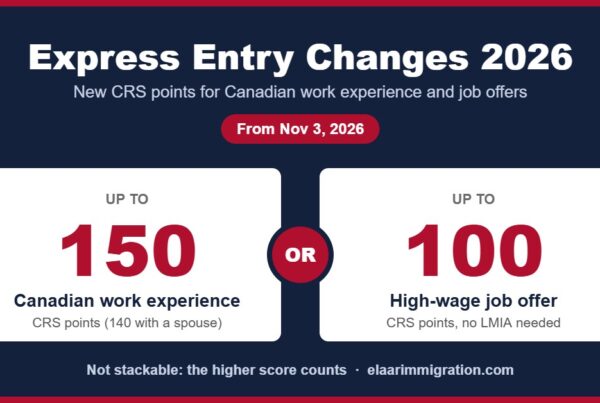
Express entry changes 2026 graphic showing up to 150 crs points for canadian work experience or up to 100 for a high-wage job offer, not both

What Are the Express Entry Changes on November 3, 2026?

| Blog | No Comments
Express Entry changes from Nov 3, 2026: up to 150 CRS points for Canadian experience, 100 for high-wage job offers, no LMIA needed. See worked examples.
Post-graduation work permit (pgwp) for master’s graduates a 2026 guide

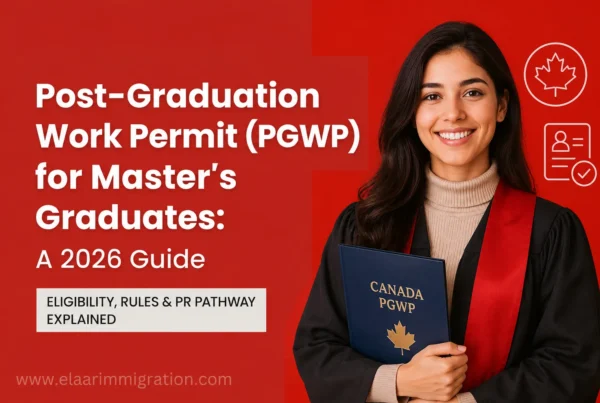
Post-Graduation Work Permit (PGWP) for Master’s Graduates: A 2026 Guide

| PGWP, Study Permits, Work Permits | No Comments
JTNDJTIxLS0lMjBIRVJPJTIwLS0lM0UlMEElMjAlMjAlM0NoZWFkZXIlMjBjbGFzcyUzRCUyMmFydGljbGUtaGVybyUyMiUzRSUwQSUyMCUyMCUyMCUyMCUyMCUzQ2RpdiUyMGNsYXNzJTNEJTIyYXJ0aWNsZS1tZXRhJTIyJTNFJTBBJTIwJTIwJTIwJTIwJTIwJTIwJTNDZGl2JTIwY2xhc3MlM0QlMjJtZXRhLXJldmlld2VkJTIyJTNFJTBBJTIwJTIwJTIwJTIwJTIwJTIwJTIwJTIwJTNDZGl2JTIwY2xhc3MlM0QlMjJtZXRhLWF2YXRhciUyMiUzRUtTJTNDJTJGZGl2JTNFJTBBJTIwJTIwJTIwJTIwJTIwJTIwJTIwJTIwJTNDZGl2JTNFJTBBJTIwJTIwJTIwJTIwJTIwJTIwJTIwJTIwJTIwJTIwJTNDc3Ryb25nJTNFUmV2aWV3ZWQlMjBieSUyMEtlc2hhdiUyMFNoYXJtYSUyQyUyMFJDSUMlMjAlMjNSNTMwMjAzJTNDJTJGc3Ryb25nJTNFJTBBJTIwJTIwJTIwJTIwJTIwJTIwJTIwJTIwJTNDJTJGZGl2JTNFJTBBJTIwJTIwJTIwJTIwJTIwJTIwJTNDJTJGZGl2JTNFJTBBJTIwJTIwJTIwJTIwJTIwJTIwJTNDZGl2JTNFOCUyMG1pbiUyMHJlYWQlM0MlMkZkaXYlM0UlMEElMjAlMjAlMjAlMjAlM0MlMkZkaXYlM0UlMEElMjAlMjAlM0MlMkZoZWFkZXIlM0U=If you are completing a master’s degree in Canada, the Post-Graduation Work Permit is one of the most important next steps in your immigration journey. For many master’s graduates, it…
How many hours can international students work in canada 2026 rules explained

How Many Hours Can International Students Work in Canada? 2026 Rules Explained

| Blog | No Comments
International students in Canada who meet IRCC's off-campus work eligibility requirements may work up to 24 hours per week off campus during regular academic terms.
Mass cancellation canada

IRCC Introduces Cancellation Framework for Temporary Resident Documents

| News | No Comments
IRCC Now Has Clear Rules for Cancelling Visitor Visas, Work Permits, Study Permits, and eTAs. Explore the new mass cancellation framework for temporary residents.

Need Help with Humanitarian and Compassionate?

Apply for Humanitarian and Compassionate Program and gain a status to live in Canada freely.